
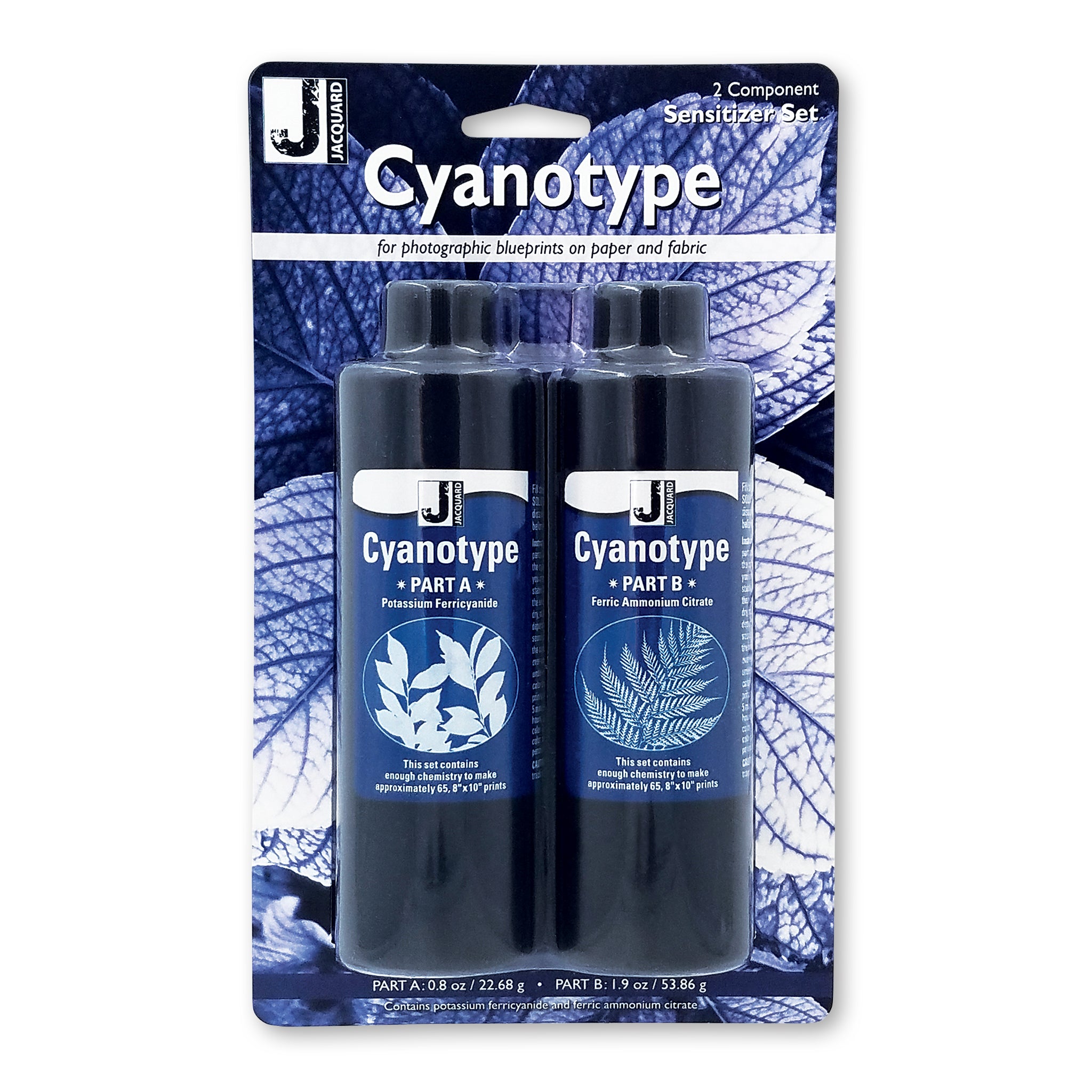
Cyanotype Set
2 Component Set for Photographic blueprints on paper and fabric
Cyanotype is the "original" sun-printing process, one of the earliest photographic techniques. Discovered in 1842 and distinctive for producing rich, Prussian blue monochromatic prints, Cyanotype was popular well into the 20th century as an inexpensive method for reproducing photographs, documents, maps and plans (hence the enduring architectural term "blueprint") and famously, for making impressions of biological specimens in the field ("photograms").
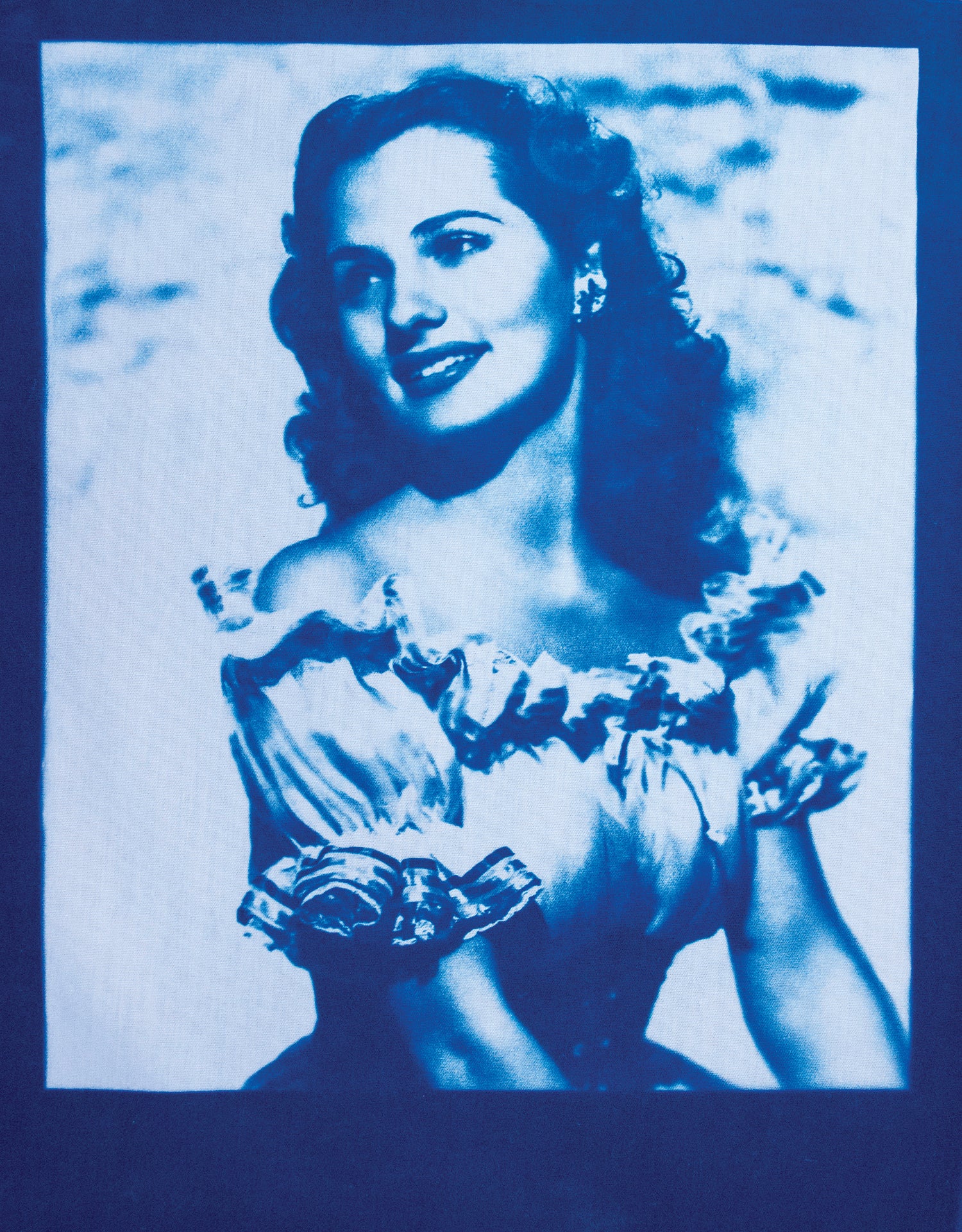
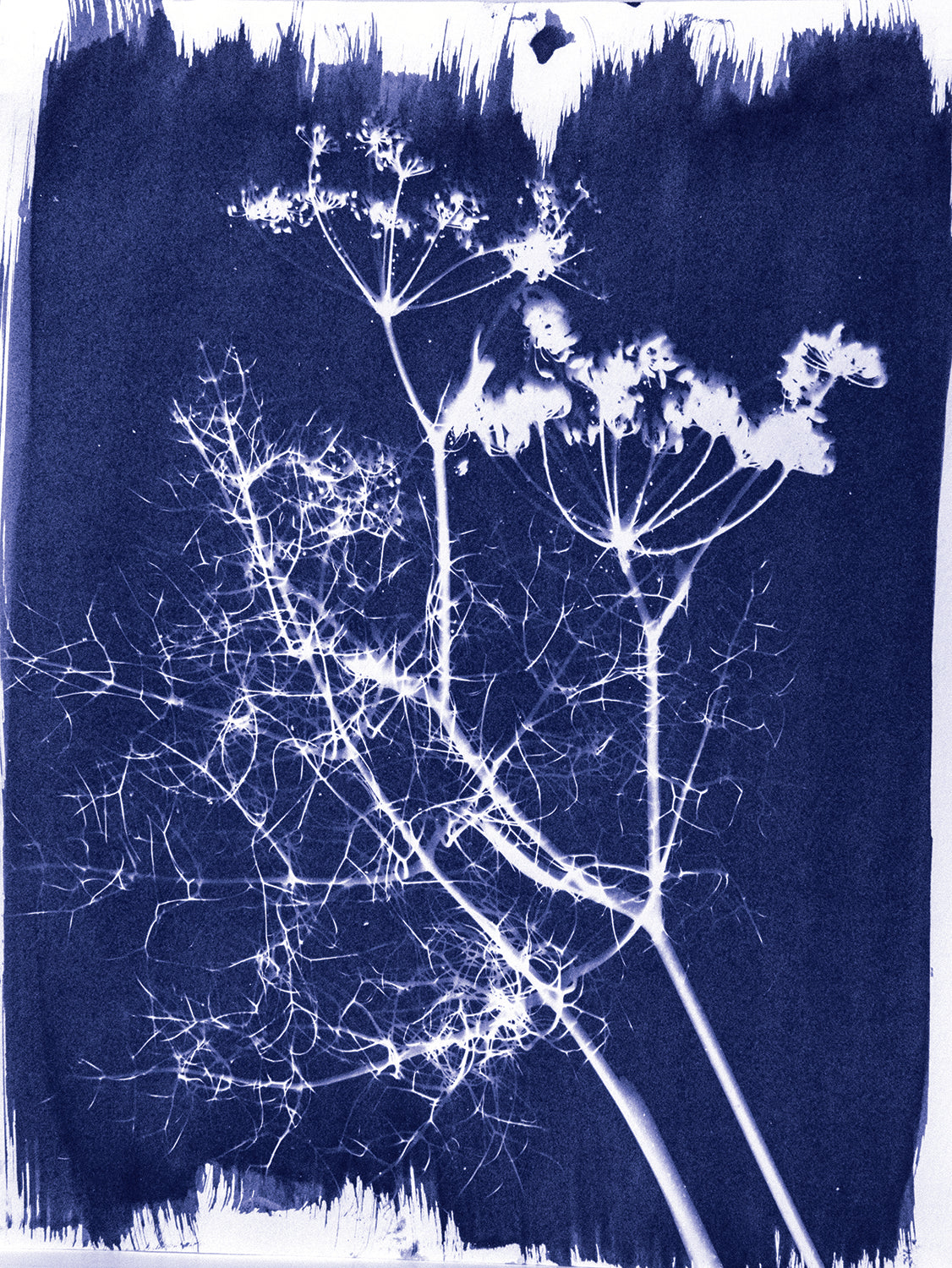
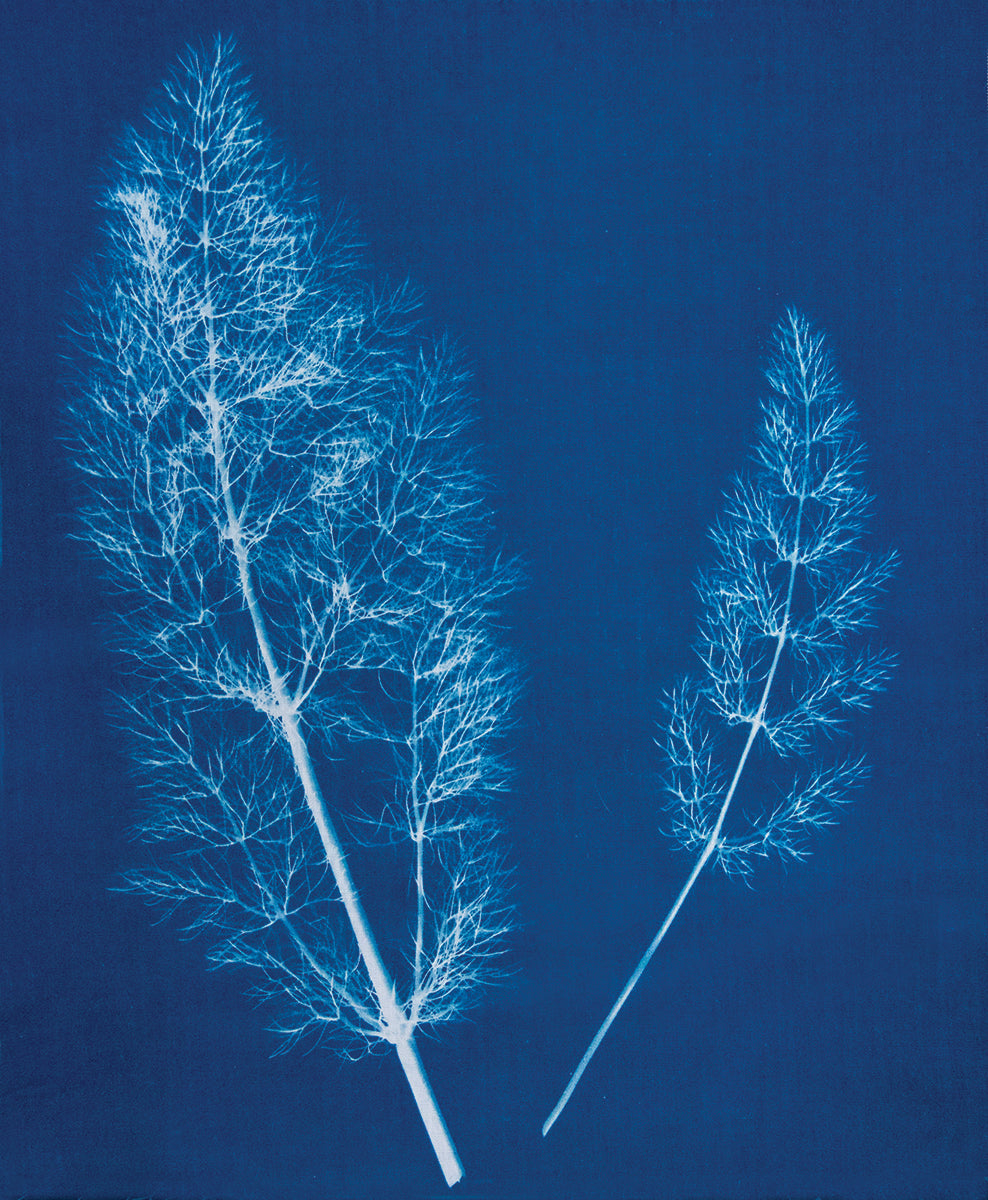
Harness the power of the sun to make detailed prints from virtually any object that casts a shadow: tools, toys, plants, leaves, stones, sand, string, lace, etc. Simply place the object on the sensitized surface and expose to sunlight (UV). Use a digitally-printed photographic negative (an inverted black and white photo inkjet-printed onto a transparency*) instead of an object to create full-resolution photographs on paper or fabric. Great for photographers, mixed media artists, printmakers, quilters, kids and more, the cyanotype process is easy, forgiving, quick, magical and fun. Capture the nuance of every shadow—a fun group activity for any age!
• Historic sun-printing process — Based on an 1842 photographic technique that produces stunning, rich Prussian blue prints on paper or fabric using only sunlight.
• Endlessly creative — Print with any shadow-casting object, botanical, or digitally-printed transparency to create photograms, blueprints, and full-resolution photographs.
• Great value — Each 2-component set makes approximately 65 prints on paper or 50 prints on fabric at 8" x 10".
This set contains enough chemistry to make approximately sixty-five 8" x 10" prints on paper or fifty 8" x 10" prints on fabric.
How to Make a Cyanotype Print

How to Make your Own Cyanotype Prints
Frequently Asked Questions
Do I need special equipment to get started?
No, just the cyanotype set, water, and access to sunlight (or a UV lamp). No darkroom or chemistry experience needed.
How long does it take to make a print?
Exposure typically takes 5 to 20 minutes depending on sunlight strength, then a quick water rinse develops the image instantly. Most prints are done start to finish in under 30 minutes.
Can I use this indoors, or do I need direct sun?
Direct sunlight gives the best contrast and fastest exposure, but a UV lamp works too if you don't have reliable outdoor light.
What can I print with it?
Anything that blocks light works as a "negative," including pressed flowers and leaves, lace, film negatives, drawings on transparency film, or even digital negatives printed at home.
Is this safe for kids/beginners?
Yes, it's a beginner friendly process. Just avoid getting the solution in eyes and wash hands after handling.
How long do the chemicals last once mixed?
Unmixed, the two part solution stores well in a cool, dark place for months to a year or more. Once mixed together, use within a few hours for best results.
What surfaces can I print on?
Works great on paper, cotton fabric, and other natural fibers. Pre-coated surfaces aren't required since you can coat your own paper or fabric with the solution.